What is Direct Instruction in Math?
Direct Instruction (DI) is a systematic‚ teacher-led approach‚ often utilizing the “I Do‚ We Do‚ You Do” model‚ to maximize student achievement in mathematics.
Defining Direct Instruction
Direct Instruction is a highly structured‚ teacher-directed method characterized by explicit teaching and a focus on skill mastery. It’s not simply lecturing; rather‚ it’s a carefully sequenced approach where concepts are broken down into smaller‚ manageable parts. Teachers actively model procedures‚ providing clear explanations and frequent checks for understanding.
This method emphasizes a fast pace and high levels of student engagement‚ minimizing opportunities for errors to become ingrained. It’s a deliberate and planned approach‚ contrasting with more exploratory learning styles. The goal is efficient learning‚ ensuring all students acquire foundational skills before moving on.
Essentially‚ Direct Instruction provides a roadmap for learning‚ guiding students step-by-step towards proficiency‚ and is a necessary first step in many instructional scenarios.

The Historical Context of Direct Instruction
Direct Instruction’s roots trace back to the work of educational psychologists in the 1960s‚ notably Siegfried Engelmann and Wesley Becker. They sought a more effective method for teaching disadvantaged students‚ observing that traditional approaches often failed to deliver consistent results. Their research identified specific teaching behaviors that significantly improved student learning outcomes.
This led to the development of a highly structured curriculum and teaching methodology‚ initially focused on basic skills. The National Institute for Direct Instruction (NIFDI) became a central resource‚ promoting and refining the approach.
Throughout the decades‚ DI has experienced periods of both popularity and critique‚ but its core principles remain influential. It gained traction as a method for addressing learning gaps and ensuring all students have access to effective instruction‚ particularly in mathematics.
The Core Principles of Direct Instruction Math
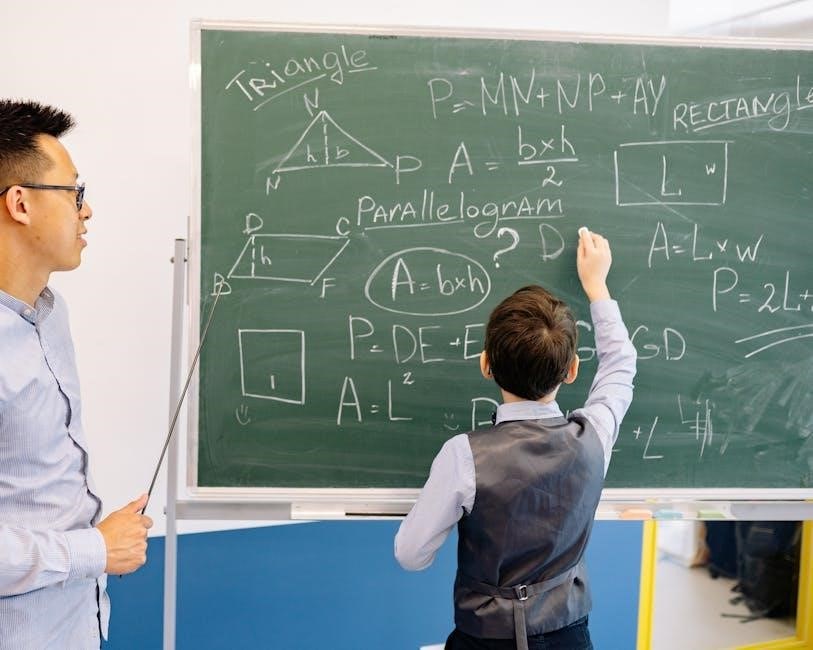
Direct Instruction in math centers on explicit teaching‚ guided practice with teacher support (“We Do”)‚ and independent practice (“You Do”) for mastery.
Explicit Teaching & Modeling
Explicit teaching forms the bedrock of Direct Instruction. Teachers clearly define learning objectives and present skills in a structured‚ sequential manner. This involves breaking down complex concepts into smaller‚ manageable steps.
Modeling is crucial; teachers demonstrate how to solve problems‚ thinking aloud to reveal their reasoning process. This isn’t simply showing the answer‚ but articulating the ‘why’ behind each step.
Effective modeling includes carefully scripted lessons‚ ensuring clarity and precision. Visual aids and manipulatives often accompany modeling to enhance understanding. The goal is to provide a clear‚ unambiguous example for students to emulate‚ minimizing confusion and maximizing initial comprehension before students attempt guided or independent practice. This initial clarity sets the stage for successful learning.
Guided Practice: “We Do”
The “We Do” phase is a pivotal component of Direct Instruction‚ bridging the gap between teacher modeling and independent work. Here‚ the teacher and students collaborate to solve problems together.
The teacher guides the process‚ prompting students to contribute each step‚ rather than simply providing answers. This active participation reinforces learning and allows the teacher to immediately address misconceptions.
Effective “We Do” sessions involve frequent questioning‚ checking for understanding‚ and providing corrective feedback. It’s a controlled environment where students can practice new skills with support‚ building confidence and solidifying their grasp of the concepts before tackling independent tasks. This collaborative approach fosters a supportive learning environment.
Independent Practice: “You Do”
The “You Do” stage in Direct Instruction signifies students applying newly learned skills autonomously. Following successful “We Do” practice‚ students now tackle similar problems individually‚ demonstrating their comprehension without direct teacher guidance.
This phase isn’t about simply assigning worksheets; it’s a crucial assessment opportunity. Teachers circulate‚ observing student work‚ providing targeted support to those struggling‚ and identifying common errors.
Independent practice solidifies learning and builds fluency. It allows students to internalize the concepts and develop problem-solving skills. The key is to ensure problems are appropriately challenging – not too easy to be unproductive‚ nor too difficult to cause frustration. Successful “You Do” builds confidence and mastery.
Checking for Understanding
Checking for Understanding is an ongoing process woven throughout a Direct Instruction lesson‚ not merely a final assessment. It’s about actively gauging student comprehension during instruction‚ not just after.
Effective techniques include frequent questioning – both choral responses and individual checks – quick whiteboard exercises‚ and “thumbs up/down” signals. Teachers should probe beyond simple recall‚ asking students to explain why a process works‚ not just how.
This continuous monitoring allows for immediate adjustments to instruction. If many students struggle‚ the teacher revisits the concept‚ offering alternative explanations or additional examples. This proactive approach prevents misconceptions from solidifying and ensures all students stay engaged and on track.

Benefits of Using Direct Instruction in Math
Direct Instruction demonstrably improves student outcomes‚ boosts engagement by minimizing confusion‚ and proves particularly effective for diverse learners needing structured guidance.
Improved Student Achievement
Direct Instruction’s structured approach consistently yields significant gains in student achievement across various mathematical concepts. By explicitly teaching skills and providing ample opportunities for guided and independent practice‚ students develop a stronger foundational understanding. This method minimizes learning gaps and accelerates progress‚ particularly for students who may struggle with more open-ended learning styles.
The systematic nature of DI ensures that all students are exposed to the same core content‚ delivered in a clear and concise manner. This reduces the likelihood of misconceptions forming and allows teachers to efficiently address areas where students need additional support. Research consistently demonstrates that classrooms employing Direct Instruction strategies exhibit higher levels of student mastery and improved performance on standardized assessments‚ ultimately leading to greater academic success.
Increased Engagement & Reduced Misconceptions
Direct Instruction fosters student engagement through its fast-paced‚ interactive format; Frequent questioning and immediate feedback keep students actively involved in the learning process‚ minimizing opportunities for disengagement. The clear‚ step-by-step presentation of concepts reduces ambiguity and proactively addresses potential misconceptions before they take root.
By explicitly modeling problem-solving strategies‚ teachers demonstrate the correct approach‚ preventing students from developing incorrect methods. The “We Do” portion of the lesson provides a safe space for students to practice with guidance‚ solidifying their understanding and building confidence. This proactive approach to error prevention‚ combined with consistent checks for understanding‚ significantly reduces the prevalence of common mathematical misconceptions and promotes a more positive learning experience.
Effective for Diverse Learners
Direct Instruction’s structured and explicit nature makes it particularly effective for diverse learners‚ including students with learning disabilities‚ English language learners‚ and those requiring additional support. The clear‚ concise language and step-by-step instructions minimize cognitive load‚ allowing all students to access the core concepts.
The consistent routines and predictable format provide a sense of security and reduce anxiety‚ creating a more inclusive learning environment. Frequent opportunities for guided practice and immediate feedback ensure that students receive the individualized attention they need to succeed. Furthermore‚ DI’s emphasis on mastery learning allows students to progress at their own pace‚ ensuring that no one is left behind‚ fostering equitable access to mathematical understanding for all.

Implementing Direct Instruction: A Step-by-Step Guide
Successful implementation requires careful lesson planning‚ scripting to maintain pacing‚ and strategic use of visual aids and manipulatives to enhance comprehension.
Lesson Planning with Direct Instruction
Effective lesson planning is foundational to Direct Instruction in math. Begin by clearly defining specific learning objectives – what exactly will students know or be able to do? Break down complex skills into smaller‚ manageable steps. Sequence these steps logically‚ building from prerequisite knowledge.

Next‚ meticulously script each part of the lesson: the initial explanation (“I Do”)‚ the guided practice (“We Do”)‚ and the independent practice (“You Do”). Anticipate potential student errors and prepare targeted responses.
Include frequent checks for understanding throughout the lesson. Plan for concise‚ focused instruction‚ minimizing extraneous information. Consider incorporating visual aids and manipulatives to support conceptual understanding. A well-structured plan ensures efficient and effective delivery of content‚ maximizing student learning.
Scripting and Pacing
Detailed scripting is a hallmark of Direct Instruction. This involves writing out‚ word-for-word‚ what the teacher will say during each phase of the lesson – explanations‚ questions‚ and prompts. Scripting ensures clarity‚ precision‚ and consistency in delivery. It minimizes ambiguity and keeps students focused.
Pacing is equally crucial. Direct Instruction lessons move at a brisk‚ yet manageable‚ tempo. Teachers should avoid lengthy explanations or digressions.
Maintain a steady rhythm‚ allowing sufficient time for student responses and checks for understanding‚ but avoiding unnecessary pauses. A well-paced lesson keeps students engaged and prevents boredom or frustration. Scripting and pacing work in tandem to optimize instructional time and maximize learning gains.
Utilizing Visual Aids and Manipulatives
Direct Instruction benefits significantly from the strategic use of visual aids and manipulatives. These tools help make abstract mathematical concepts more concrete and accessible to students‚ particularly those who learn best visually or kinesthetically.
Examples include number lines‚ fraction bars‚ geometric shapes‚ and base-ten blocks. Visuals should be large‚ clear‚ and directly related to the lesson’s objective. Manipulatives allow students to physically interact with the concepts‚ fostering deeper understanding.
Teachers should model how to use these tools effectively‚ demonstrating their connection to the underlying mathematical principles. Combining visuals and manipulatives enhances engagement and supports student learning throughout the “I Do‚ We Do‚ You Do” sequence.

Common Challenges & Solutions
Challenges in Direct Instruction include student errors‚ maintaining engagement‚ and adapting lessons. Solutions involve immediate feedback‚ varied practice‚ and flexible pacing;
Addressing Student Errors
Immediate correction is crucial when employing Direct Instruction in math. Don’t allow errors to become ingrained; address them swiftly and directly during the “We Do” phase. Instead of simply stating an answer is wrong‚ model the correct process‚ thinking aloud to demonstrate the reasoning.
Break down complex problems into smaller‚ manageable steps. This allows for pinpointing the exact location of the error. Encourage students to identify their own mistakes through guided questioning – “Can you show me where you got stuck?” or “What was your thinking here?”.
Positive reinforcement is key. Frame corrections as learning opportunities‚ not failures. Re-teaching a concept immediately after an error reinforces understanding. Consistent error analysis informs future lesson planning‚ allowing teachers to proactively address common misconceptions.
Maintaining Student Engagement
Pacing is paramount in Direct Instruction to prevent disengagement. Lessons should move briskly‚ but not so quickly that students feel overwhelmed. Frequent questioning – both choral response and individual checks for understanding – keeps students actively involved. Varying the questioning techniques prevents predictability.
Incorporate brief‚ focused “brain breaks” or quick review activities to maintain attention. While DI is teacher-led‚ encourage student participation through modeling and guided practice. Positive reinforcement and specific praise for effort are vital motivators.
Connect mathematical concepts to real-world applications to demonstrate relevance. A clear lesson structure‚ with predictable routines‚ provides a sense of security and allows students to focus on learning the content.
Adapting Direct Instruction for Different Math Topics
Direct Instruction’s core principles remain consistent‚ but implementation varies by topic. For foundational skills like addition‚ a highly scripted approach with extensive modeling is beneficial. As concepts become more complex‚ like algebra‚ increase student participation in guided practice.
When introducing abstract concepts‚ utilize visual aids and manipulatives extensively. For problem-solving‚ model multiple solution strategies‚ then guide students through applying them. Break down multi-step problems into smaller‚ manageable components.

Adjust the pace based on the difficulty of the material. Regularly assess understanding and provide targeted remediation. Remember to connect new concepts to previously learned material to build a strong conceptual foundation.
Direct Instruction vs. Other Math Teaching Methods
Direct Instruction differs from inquiry-based and constructivist approaches‚ prioritizing teacher-led instruction and explicit skill-building before independent exploration and discovery.
Comparing to Inquiry-Based Learning
Inquiry-based learning contrasts sharply with Direct Instruction‚ placing the student at the center of the learning process. Instead of a teacher explicitly demonstrating concepts‚ students investigate questions‚ explore resources‚ and construct their own understanding. While valuable‚ this method can be less efficient for initial skill acquisition.
Direct Instruction excels at establishing a foundational understanding‚ providing a structured pathway for all learners. Inquiry-based learning often assumes a certain level of prior knowledge‚ which may not be present in all students. A key difference lies in the level of scaffolding; DI provides significant support‚ gradually releasing responsibility‚ while inquiry-based learning often requires students to navigate challenges with minimal guidance initially.
Ultimately‚ the most effective approach may involve a blend of both‚ utilizing Direct Instruction to build core competencies and then transitioning to inquiry-based activities for deeper exploration and application.
Contrasting with Constructivism
Constructivism posits that learners actively build knowledge through experience‚ reflecting on those experiences and integrating new information with existing schemas. This differs from Direct Instruction’s more teacher-directed approach‚ where knowledge is transmitted to students. While constructivism emphasizes individual discovery‚ DI prioritizes efficient knowledge transfer and mastery of foundational skills.
A core tenet of constructivism is that learning is most effective when it’s personally meaningful. Direct Instruction‚ however‚ often focuses on decontextualized skills‚ arguing that mastery of these skills provides a base for later application. Critics of DI suggest it can be overly rigid and may not foster deep conceptual understanding‚ a key goal of constructivist approaches.
Both philosophies have merit; a balanced approach might leverage DI for initial skill development and then employ constructivist activities to promote deeper understanding and application.
Finding the Right Balance
Effective math instruction rarely relies solely on one method. The most impactful teaching often blends Direct Instruction’s efficiency with the deeper understanding fostered by other approaches. Begin with DI to establish a strong foundation of core skills and concepts‚ ensuring all students possess the necessary tools.
Subsequently‚ incorporate elements of inquiry-based learning or constructivism to encourage students to apply their knowledge‚ solve complex problems‚ and develop critical thinking skills. This transition allows for personalized learning and caters to diverse learning styles.
Consider the specific math topic; procedural skills benefit from DI‚ while conceptual understanding thrives with exploration. Regularly assess student understanding to adjust the balance‚ ensuring both skill mastery and meaningful comprehension.

Resources for Direct Instruction in Math
NIFDI provides comprehensive DI support‚ while McGraw-Hill Education offers sample lessons. Numerous online platforms and tools supplement these resources for effective implementation.
The National Institute for Direct Instruction (NIFDI)
The National Institute for Direct Instruction (NIFDI) stands as the world’s leading authority and support provider for Direct Instruction. Dedicated to maximizing student success‚ NIFDI offers a wealth of resources tailored for administrators‚ teachers‚ and parents alike. Their website serves as a central hub for understanding and implementing DI effectively across various educational settings.
NIFDI’s commitment extends to providing detailed information about the DI methodology‚ research-backed evidence supporting its efficacy‚ and practical tools for classroom application. Notably‚ they generously offer sample lessons‚ courtesy of McGraw-Hill Education‚ allowing educators to experience DI firsthand. These resources are designed to empower educators to confidently deliver high-quality instruction and foster significant academic gains for all students. NIFDI truly champions a proven path to improved learning outcomes.
McGraw-Hill Education Resources
McGraw-Hill Education is a significant partner in the dissemination and support of Direct Instruction (DI) methodologies within mathematics education. They collaborate closely with the National Institute for Direct Instruction (NIFDI)‚ providing crucial materials and resources for effective DI implementation.
Specifically‚ McGraw-Hill contributes extensively to the availability of sample DI lessons‚ which NIFDI features prominently on its website. These lessons showcase the structured‚ explicit teaching approach characteristic of DI‚ offering educators practical examples to adapt and utilize in their classrooms. Their materials are designed to align with DI principles‚ ensuring a consistent and research-based instructional experience.
By partnering with NIFDI‚ McGraw-Hill reinforces its commitment to providing educators with the tools necessary to enhance student achievement and foster a deeper understanding of mathematical concepts through proven instructional strategies.
Online Platforms & Tools
While dedicated online platforms solely focused on Direct Instruction (DI) math are emerging‚ currently‚ the support is largely integrated within broader educational technology ecosystems. Many platforms allow teachers to implement DI principles‚ even if they don’t explicitly brand themselves as “DI-specific.”
Teachers can leverage interactive whiteboards and presentation software to deliver explicit instruction and model problem-solving‚ key components of DI. Online assessment tools facilitate frequent checks for understanding‚ crucial for gauging student progress during “We Do” and “You Do” phases.
Furthermore‚ video resources demonstrating DI lessons‚ often sourced from NIFDI and McGraw-Hill‚ are readily available. These tools‚ when thoughtfully integrated‚ can significantly enhance the delivery and effectiveness of DI math instruction in modern classrooms.